100+ Short Horror Stories: Read or Listen for Free
Explore our Ultimate Collection of Spine-chilling Tales with Immersive Audio Narrations
Loading stories...
Showing 15 stories of 35 total
Unlock All Stories
Create a free account to access our complete collection of short horror stories, bookmark your favorites, and get personalized recommendations.
The Web's Best Free Horror Library
Let's be honest: finding good horror online is hard. That's why we built this archive. Whether you have five minutes to kill or want a long-form mystery to solve, we have something that will make you check the locks twice. From classic ghost stories to our new immersive audio narrations, everything here is free and terrifying.
Don't Just Read. Listen.
Too scared to look at the screen? Put on your headphones. We are adding professional audio narrations to our best stories every week.
Creepypastas & Classics
We collect everything from viral internet creepypastas to old-school paranormal tales. If it's scary, it belongs here.
Always Free. No Paywalls.
Horror should be accessible. Read thousands of free horror stories without needing a subscription or a credit card.
Midnight Snacks
Most of our tales are short horror stories designed to be read in under 10 minutes. Perfect for a quick thrill before bed.
What kind of horror do you like? If you are into the subtle stuff, check out our psychological thrillers—the kind where the monster is inside your head. If you prefer jump scares and gore, we have plenty of scary stories to read that go straight for the jugular.
We also have a soft spot for true horror stories (the ones that might actually happen to you) and those classic short horror stories with a twist that leave you staring at the ceiling. Whatever your poison, ShortHorrorStories.net is here to ruin your sleep schedule.
Top Free Stories
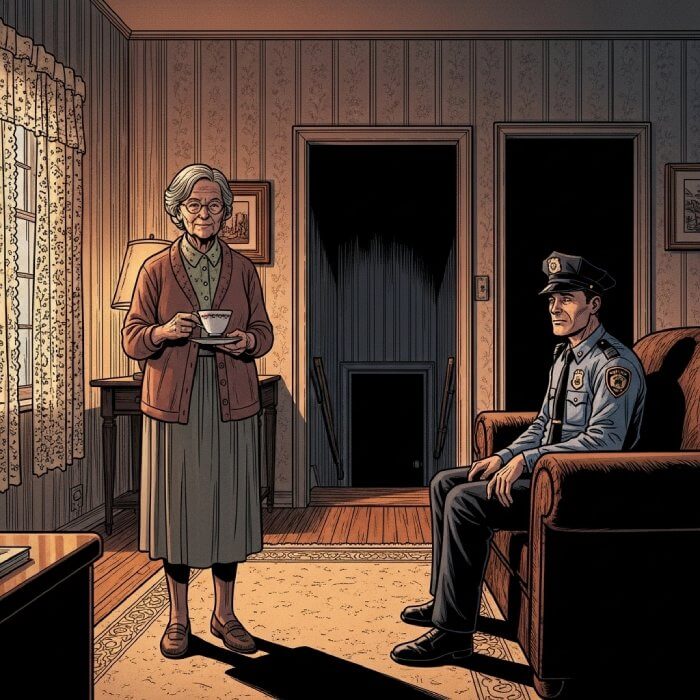
A Proper Host
A police officer comes to the door expecting answers and finds hospitality instead—gentle conversation, practiced kindness, and a home that seems eager to put him at ease. As the visit stretches on, courtesy begins to feel like confinement, and cooperation slips quietly into consent. A Proper Host is a slow-burn psychological horror about the unsettling power of politeness, the trust placed in familiar rituals, and how fear often begins the moment we stop questioning why we feel so comfortable.
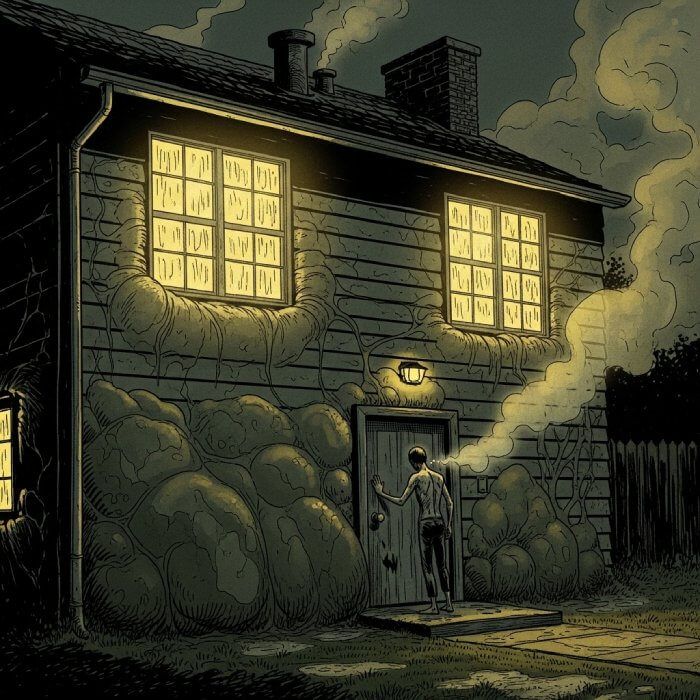
Open House
A man prepares his house the way others might prepare a body or a ritual—carefully, patiently, with devotion. Heat rises, moisture settles, and decay is no longer treated as failure but as purpose. As isolation deepens and the boundaries between home and self begin to soften, the house responds, growing attentive and hungry. Open House is a claustrophobic descent into obsession, transformation, and the seductive comfort of surrendering to something that promises belonging at any cost.
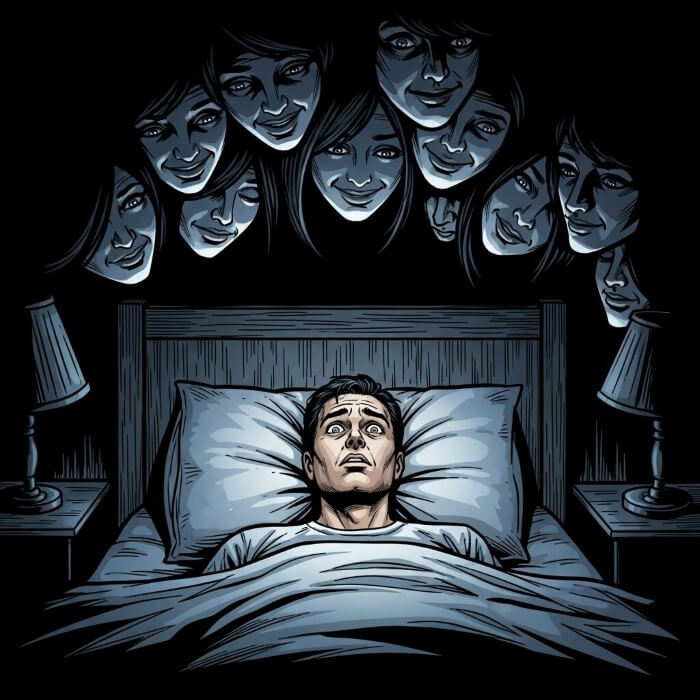
The Ones Who Lean In
You’re never more vulnerable than when you can’t move. Jonah wakes every night trapped inside his own body, lungs working, eyes open, while something stands just beyond his reach. Faces hover in the dark—familiar, smiling, patient. Doctors call it sleep paralysis. Stress. Hallucination. Jonah tries to believe them. But the faces keep coming back. They lean closer. They linger longer. And they don’t feel imagined—they feel expectant. As exhaustion erodes the boundary between waking and dreaming, Jonah begins to notice the same unease bleeding into daylight. Reflections hesitate. Conversations feel watched. The night doesn’t end when morning comes. The Ones Who Lean In is a quiet psychological horror about helplessness, exposure, and the terror of being observed by something that has no need to hurry. Some horrors don’t chase you. They wait until you’re still enough to notice them.
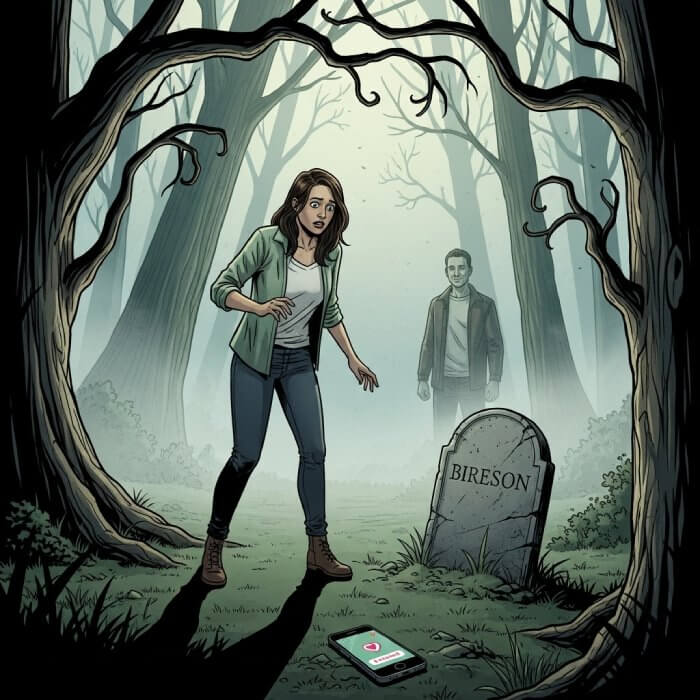
Matched, Then Missing
A dating app match offers the kind of attention that feels rare, effortless, and deeply reassuring—until intimacy begins to feel rehearsed and memory itself starts to fracture. Drawn into a relationship that seems to know her better than it should, a woman discovers that some connections don’t lead forward, but loop endlessly back to the same lonely beginning. This is a psychological horror story about repetition disguised as romance, the terror of being remembered too well, and the price of saying yes to someone who refuses to be alone.
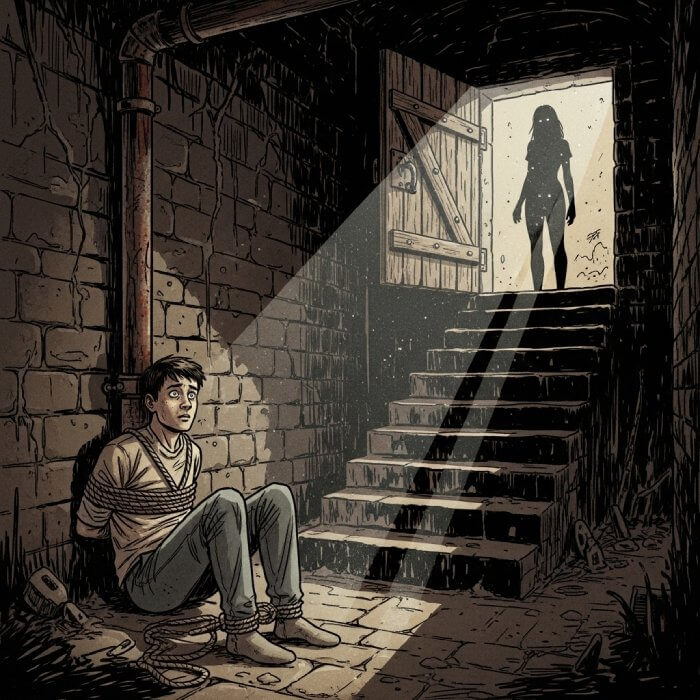
The Quiet One
Born a twin, raised to disappear, a quiet child learns that silence is the only way to survive his family’s love. When an inherited curse demands a sacrifice, his parents make their choice without hesitation—binding, testing, and preparing him for something they insist he is not. But houses remember, monsters listen, and blood has a way of correcting mistakes. This is a psychological horror story about inheritance, mistaken purity, and the terror of realizing the thing they feared was never the one they chained in the dark.
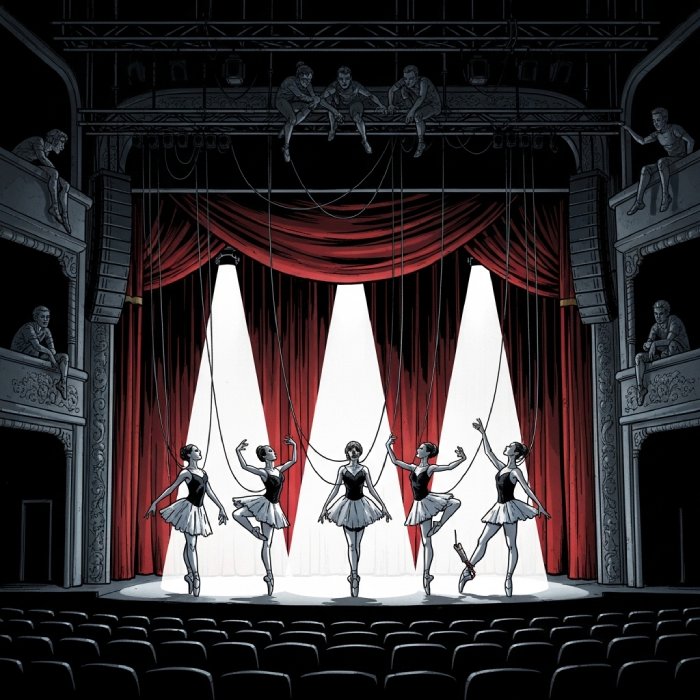
Dress Rehearsal
The performance is flawless—too flawless. Every movement lands with impossible precision, every pose held a fraction longer than comfort allows. From behind the scenes, it becomes clear that the beauty onstage is carefully managed, sustained by systems the audience will never see. As applause rises, strain builds where elegance is meant to hide it. This story descends into the unsettling space where art demands obedience, perfection overrides humanity, and the most disturbing truths are concealed behind velvet curtains and standing ovations.
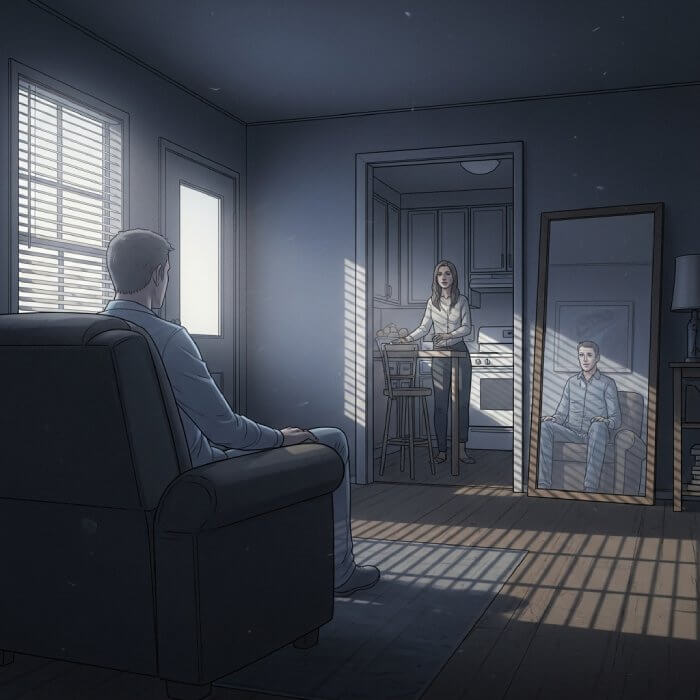
The Quiet Place He Kept
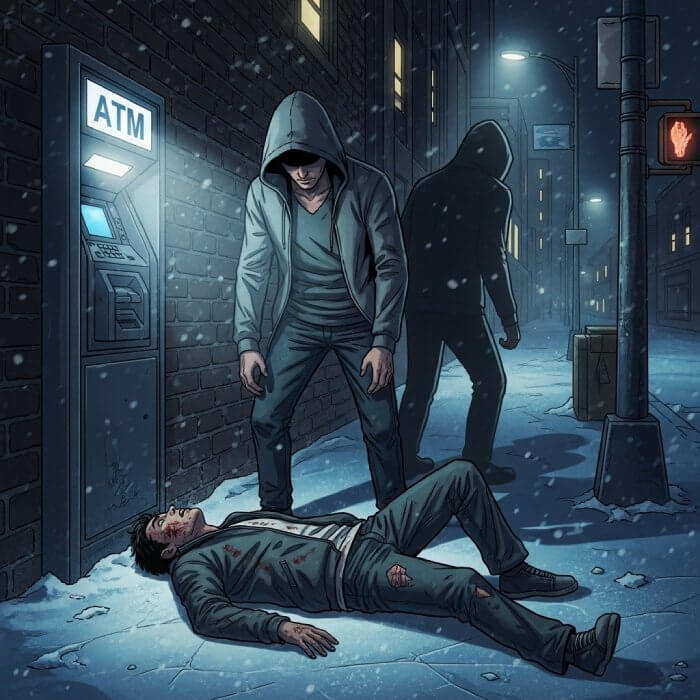
A late-night ATM stop becomes the first encounter with a double who enforces consequences no one else can see. Each reappearance is timed to moments of weakness, turning guilt into something physical and inescapable. As fear drives the narrator toward a quieter, more careful life, the violence stops—long enough to feel like progress. But some versions of justice don’t disappear when lessons are learned. They wait, patient and unfinished, for their turn to take over.
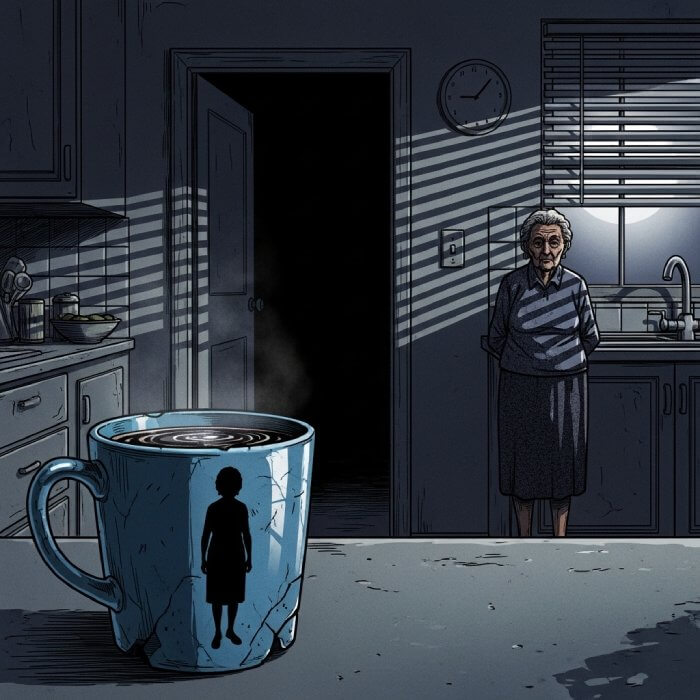
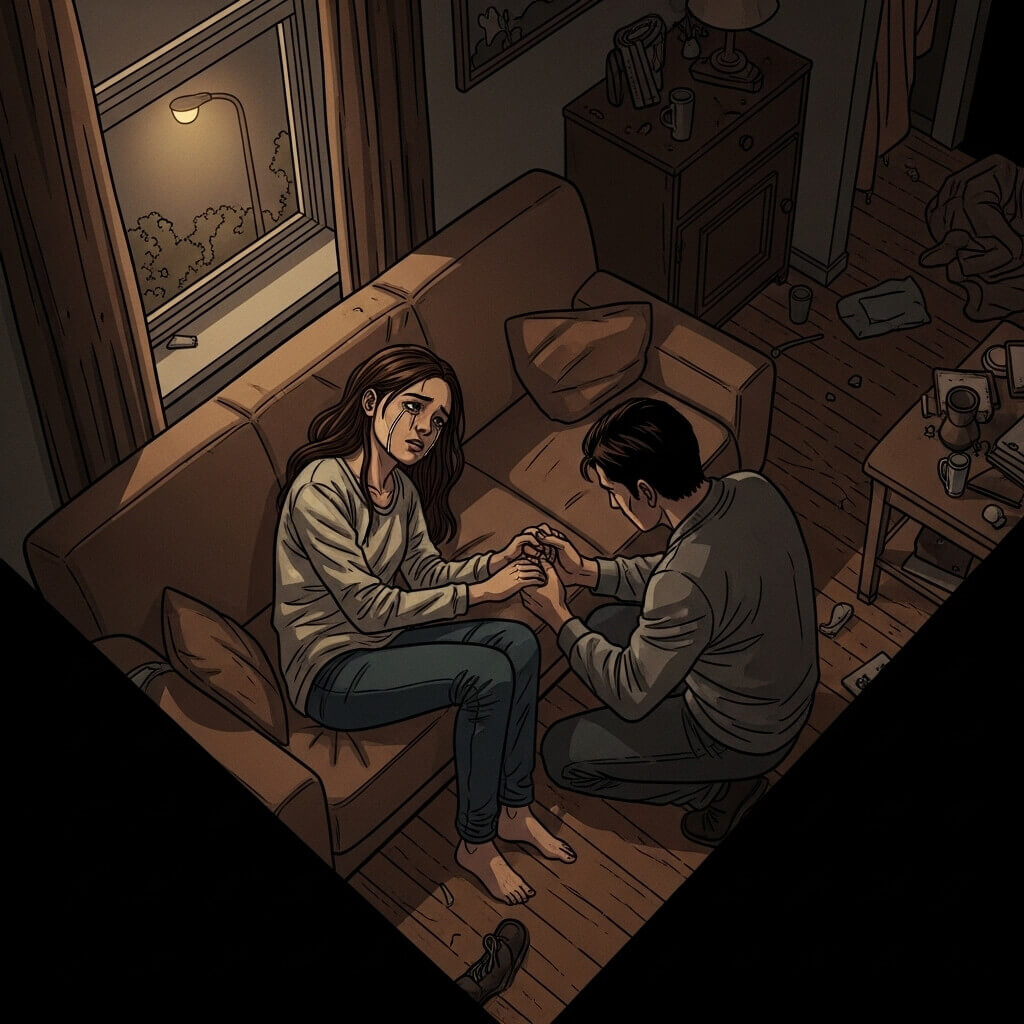
Every Morning, The Same Cup
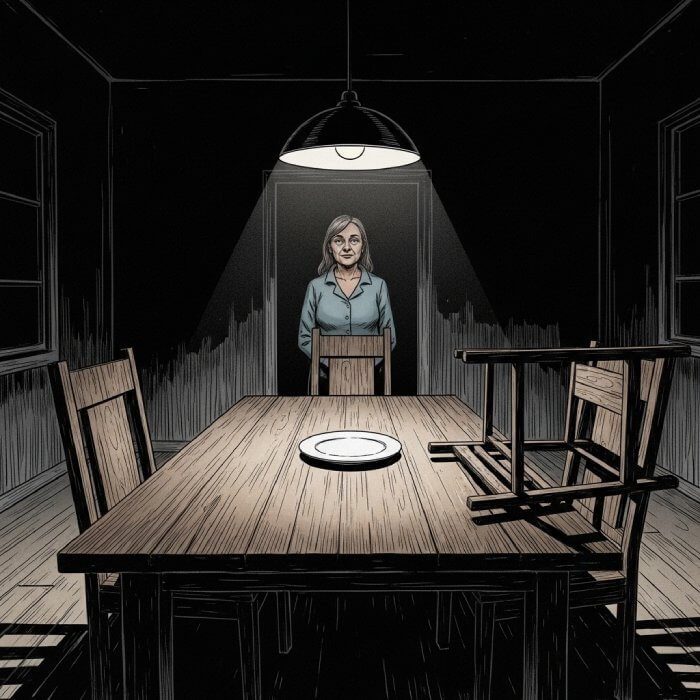
As his mother’s mind unravels and his marriage begins to fracture, Ethan starts noticing small, unsettling changes—coffee that tastes wrong, nights that don’t stay still, silences that feel deliberate. What begins as caregiving exhaustion curdles into suspicion, and suspicion hardens into something far more dangerous. When love, betrayal, and fear intersect, Ethan prepares for the worst, convinced he knows who the real threat is. This is a psychological horror story about caretaking as corrosion, the lies we accept to protect ourselves, and the quiet moment when certainty tastes metallic—and you realize too late that the poison was never meant for who you thought.
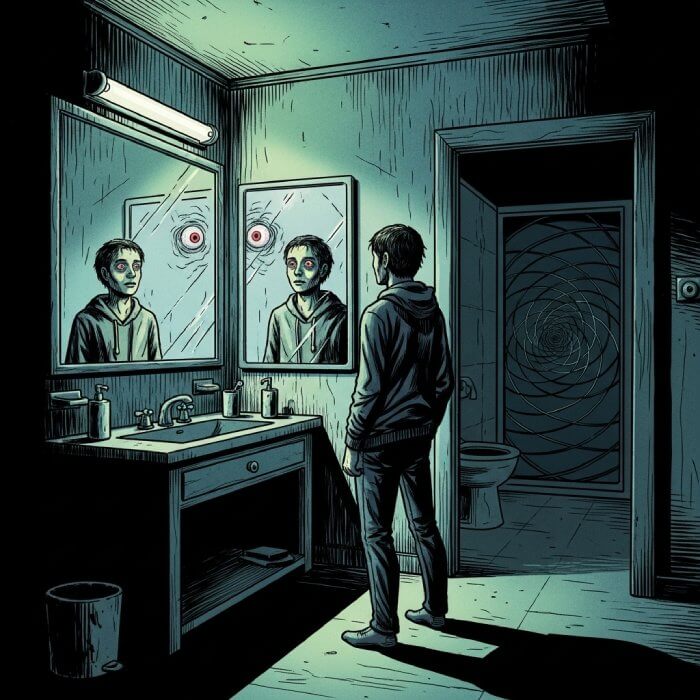
The Room that Thinks Like Me
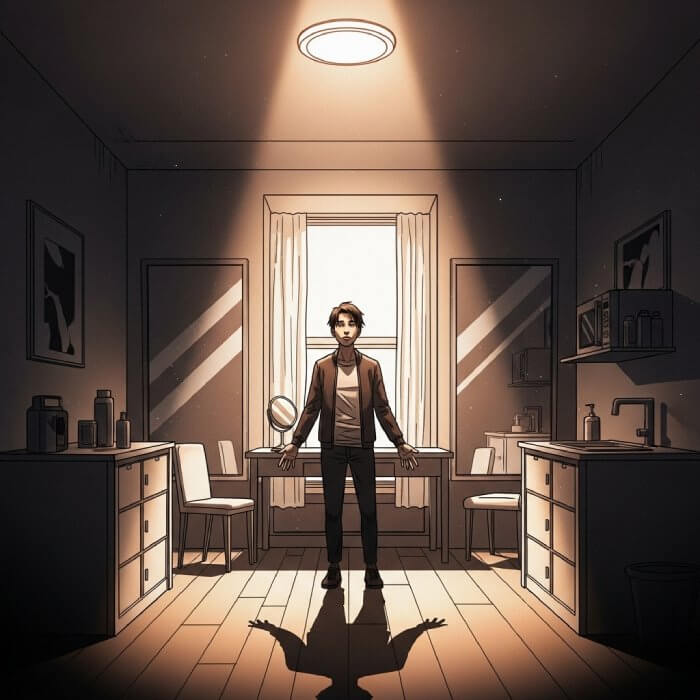
The world still works. That’s what makes it worse. The city stands unbroken. People speak on cue. Every day unfolds exactly as it should—except for the moments that hesitate. Reflections lag behind their bodies. Rooms seem to listen. The air feels heavier when certain thoughts surface, as if the environment itself is paying attention. At first, it’s easy to ignore. To call it stress. To call it coincidence. But as the glitches begin to mirror emotion rather than action, a more unsettling possibility takes shape: the world may not be responding to reality—it may be responding to him. The Room That Thinks Like Me is a quiet psychological horror about solipsism, simulated existence, and the unbearable suspicion that loneliness isn’t a side effect of the system—it’s the design.
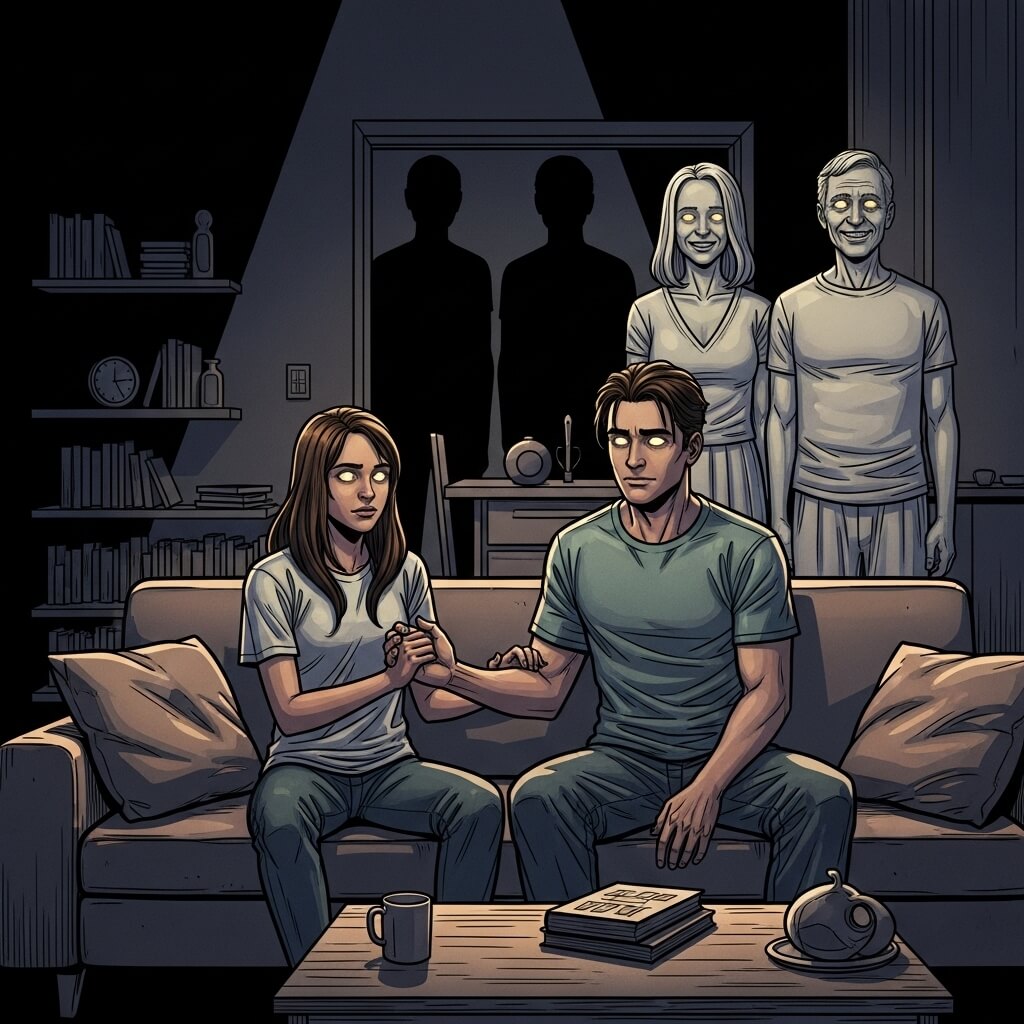
What Stayed Dead
Grief doesn’t fade—it waits. When the narrator meets Sarah in a room built for mourning, their connection feels like salvation. She understands loss in a way no one else does. And she knows a secret cure for it. A way to undo death itself. At first, the resurrected seem unchanged. Quiet. Devoted. Grateful to be alive. But love without resistance begins to feel wrong, and comfort without choice becomes suffocating. As the narrator watches the dead return—and stay—an unsettling truth surfaces: what comes back is not what was lost, and what stays alive may no longer be free. What Stayed Dead is a tale about grief turned into leverage, love twisted into compliance, and the unbearable realization that some doors should never be reopened—because not everything that dies is meant to come back.